Legacy Modernization
System Evolution with Zero Business Impact
Signs you need this
- Releases take weeks instead of days.
- Knowledge about the system lives in a few people's heads.
- Everyone is afraid to touch the core of the system.
- The outdated stack slows down every change.
- A full rewrite looks tempting — and terrifying.
- The business can't afford downtime while the system changes.
Architectural overview
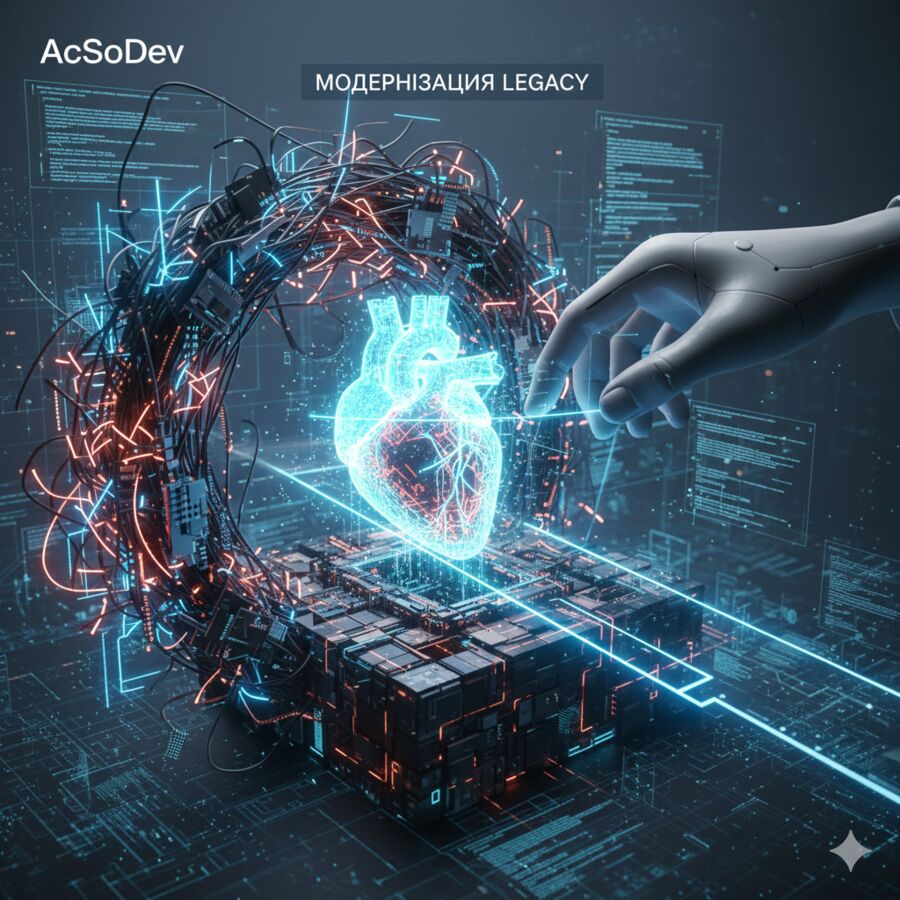
We follow the "Living Heart" strategy: no "rip and replace" disasters. By isolating the most critical parts of your system, we migrate functionality piece by piece, ensuring Zero Business Impact—your sales and operations never stop.
Our process replaces "tribal knowledge" with rigorous engineering standards. We don't just update the code; we build a sustainable ecosystem where your team can once again release features in days instead of weeks, fully protected by automated tests and modern CI/CD pipelines.
Delivery phases
-
1
Risk Mapping
2 weeksIdentifying critical dependencies and high-risk technical debt.
-
2
Heart Isolation
4-8 weeksEncapsulating legacy core and establishing modern interface boundaries.
-
3
Gradual Migration
OngoingIncremental feature replacement using the Strangler Fig pattern.
-
4
Tech Evolution
ContinuousFinal transition to a scalable, documented, and maintainable stack.
What you get
-
A risk map
Critical dependencies and the most dangerous technical debt, identified before anything changes.
-
An isolated core
The legacy core encapsulated behind modern interface boundaries, so it can be replaced safely.
-
Step-by-step migration
Functionality replaced piece by piece using the Strangler Fig pattern, while the business keeps running.
-
A maintainable stack
A documented system with automated tests and modern CI/CD, where your team ships in days again.
How we work together
-
1
Introduction
A call or an email exchange — you tell us about your situation, we ask questions. No obligations.
-
2
Agreements
We sign the NDA, SOW and other documents electronically.
-
3
Discovery
We analyze the code and the system and dive into your business domain. Usually one forward deployed engineer works on it — an engineer who also handles business analysis. For large or complex systems, we bring in the right specialists.
-
4
Report
You get a detailed report on the current state of the system and our proposals for improving it.
-
5
Your decision
The engagement can end here. Or we go further — to implementation.
The price of discovery is agreed in advance. It depends on the scope of work and the expertise required. More on pricing models and code ownership: How we work.
Targeted outcomes
- Zero impact on your sales, operations, and reputation during transition
- Restored development velocity and predictable time-to-market
- Elimination of "Tribal Knowledge" through engineering discipline and documentation
Questions about this service
Why not just rewrite everything from scratch?
Because a full rewrite is like stopping a train at full speed. We isolate the most critical parts and migrate functionality piece by piece — no "rip and replace" disasters.
Will our sales and operations stop during the migration?
No. That is the point of Zero Business Impact: the system keeps working while it is being modernized.
What is the Strangler Fig pattern?
A way to replace a system gradually. New components grow around the old system and take over its functions one by one, until the old part can be switched off safely.
How long does modernization take?
It depends on the system. Risk mapping usually takes about two weeks and isolating the core 4–8 weeks; the migration itself runs step by step. After discovery you get our proposals for your specific case.
How much does it cost?
We start with discovery, and its price is agreed in advance — it depends on the scope of work and the expertise required.
The cost of further work depends on system complexity, its current condition and the level of responsibility involved.
When we're not the right fit
- You want everything rewritten at once, in one big release.
- Price matters more than anything else.
- The code only needs to be "good enough until we sell".
Let's look at your system
Contact our engineering team to begin a technical audit of your existing infrastructure.