Launched and Forgotten? What "Production-Ready" Really Means After Release
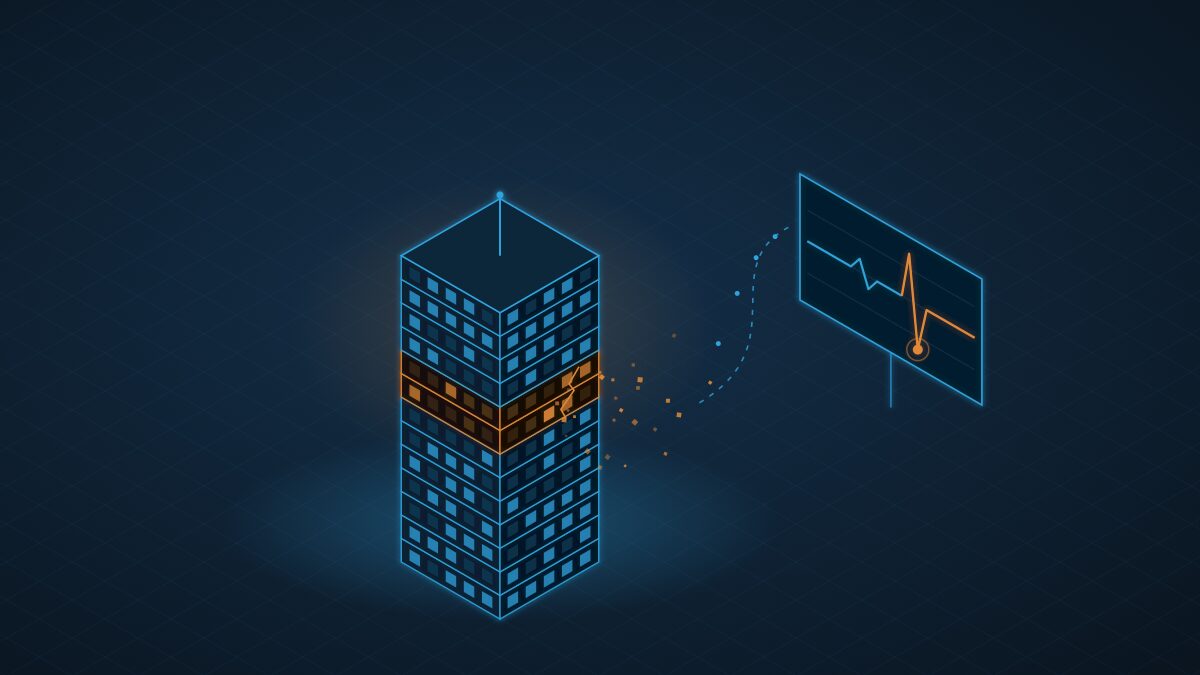
Release day feels like a finish line. The product is live, the demo went well, the team finally gets some sleep. Then, a few weeks later, a customer writes on Monday morning: "Nothing has worked since Saturday." The team opens the logs and realizes it has been broken for two days, and nobody inside the company noticed.
This scenario is common, and it rarely comes from bad code. Usually the code is fine. What's missing is everything around it: the things that tell you the system is sick, let you undo a bad change and get the data back after a mistake.
A release is the middle, not the end
While a product is being built, the team answers one question: "Does the feature work?" Once it goes live, the questions change:
- Will we know when it breaks, before our customers do?
- If the new version is bad, how quickly can we go back?
- If data is lost or corrupted, can we actually restore it?
- Who handles a problem at 2 a.m., and what exactly do they do?
None of these is about features. That's why they get pushed to "after the launch" and then quietly stay there. We wrote about this trap in The Economics of "Accelerated MVPs": speed without order is a loan, and production is where the interest starts to come due.
Five questions that show whether a system is production-ready
1. Who finds out first: you or your customer?
If outages reach you through support tickets, you don't have monitoring, only witnesses. Basic monitoring checks what the user experiences: does the site open, do payments go through, does the main workflow complete. Server CPU graphs are useful, but they don't tell you that checkout has been returning an error for an hour.
The opposite extreme is just as harmful: a hundred alerts a day that everyone has learned to ignore. A good alert is rare, actionable, and reaches someone who can act on it.
2. How expensive is a rollback?
If deploying a new version is a manual sequence of steps that only one engineer knows, every release turns into a lottery, and the team starts avoiding Friday releases for good reason. A predictable release is automated and repeatable, and it can be undone just as quickly. When rollback is cheap, releases become smaller and more frequent, and each one carries less risk.
3. Has anyone ever restored from a backup?
"We have backups" and "we can recover" are two different statements. A backup nobody has tried to restore is a hope, not a plan. Backups turn out to be incomplete, stored next to the data they're meant to protect, or restorable only in a full day nobody budgeted for. The only way to know is to rehearse the restore, on a schedule.
4. Does the infrastructure live in code or in one person's head?
If servers, networks and settings were configured by hand and only one person remembers how, the company depends on that person's availability and memory. Infrastructure as Code means the environment is described in files kept under version control. It can be reviewed and recreated, and handed over to another engineer without "magic".
5. Who is on duty, and what do they do?
"Everyone keeps an eye on it" means no one does. Someone has to be responsible for responding at any given time, with a clear rotation and fair compensation for nights and weekends. They also need a short written guide: what to check first, how to roll back, whom to call. Without it, every incident turns into improvisation under stress.
What downtime actually costs you
For the business, reliability is a question of money, not of technical aesthetics. The cost of an hour of downtime is worth calculating for your own company, roughly but honestly:
- revenue that doesn't come in while the system is unavailable;
- employees who can't work because the internal tool is down;
- contractual penalties and SLA credits, if you have any;
- customers who quietly try a competitor and don't come back;
- engineering time spent firefighting instead of building the roadmap.
The last item is the most underestimated. A team that spends half its week putting out fires loses more than those hours. Plans slip, people burn out and the best engineers start looking around. When "urgent" becomes the default mode, the business loses predictability, and that is exactly what an investor or a key customer is paying for.
Where to start without a big project
You don't need a reliability transformation to get most of the benefit. A realistic minimum, in this order:
- Backups with a tested restore. Set up automatic backups stored separately from the main system, then actually restore them into a test environment and write down how long it took.
- Monitoring from the user's perspective. Add checks on the site and two or three key business workflows, with alerts that go to a person, not into a shared channel nobody reads.
- One-command deployment and rollback. Make releases repeatable, so that rolling back is a routine action and not a heroic effort.
- Infrastructure described in code. Start with whatever is hardest to recreate by hand.
- An agreement on who responds. Write down a rotation, a contact list and a one-page guide for the most likely failures.
None of this is exotic. It's ordinary engineering hygiene, and it usually takes weeks, not months. Each step makes the next incident shorter and cheaper.
What this does NOT mean
Production readiness doesn't mean building Google-level reliability for every product. An internal tool used by twenty people doesn't need the same uptime target as a payment system. An MVP with its first fifty users doesn't need a 24/7 operations team. Over-engineering here is as wasteful as neglect: you pay for protection against risks you don't have.
The right level of reliability is a business decision. Start from what an hour of downtime would cost you and what you can afford to lose, then match the engineering effort to that answer. The mistake is not choosing a low level. The mistake is never choosing at all and finding out the answer from a customer's email.
How we approach it at Acsodev
At Acsodev, we treat operations as part of the product, not as something that comes after it. When we build a production-ready MVP, monitoring, backups and automated releases are in scope from the first version. When we take over a system that's already live, our Production Engineering work starts with an audit of exactly these five questions and then closes the gaps in order of risk. The goal is for your own team to run the system calmly without depending on us or on one irreplaceable person.
Try answering the five questions above for your own system. If any of the answers is "I'm not sure", that's where your next incident is most likely to come from.
Conclusion & strategy
A release proves that the product works once. Production readiness means it keeps working, and that when it doesn't, you find out first and recover fast. You don't need a large SRE team for that, but you do need honest answers to five simple questions. We help companies get those answers and build the minimum operational discipline that matches what a failure would actually cost them.