AI, Attack Speed, and Taking Back Control: What Changes for SMB Enterprise Systems
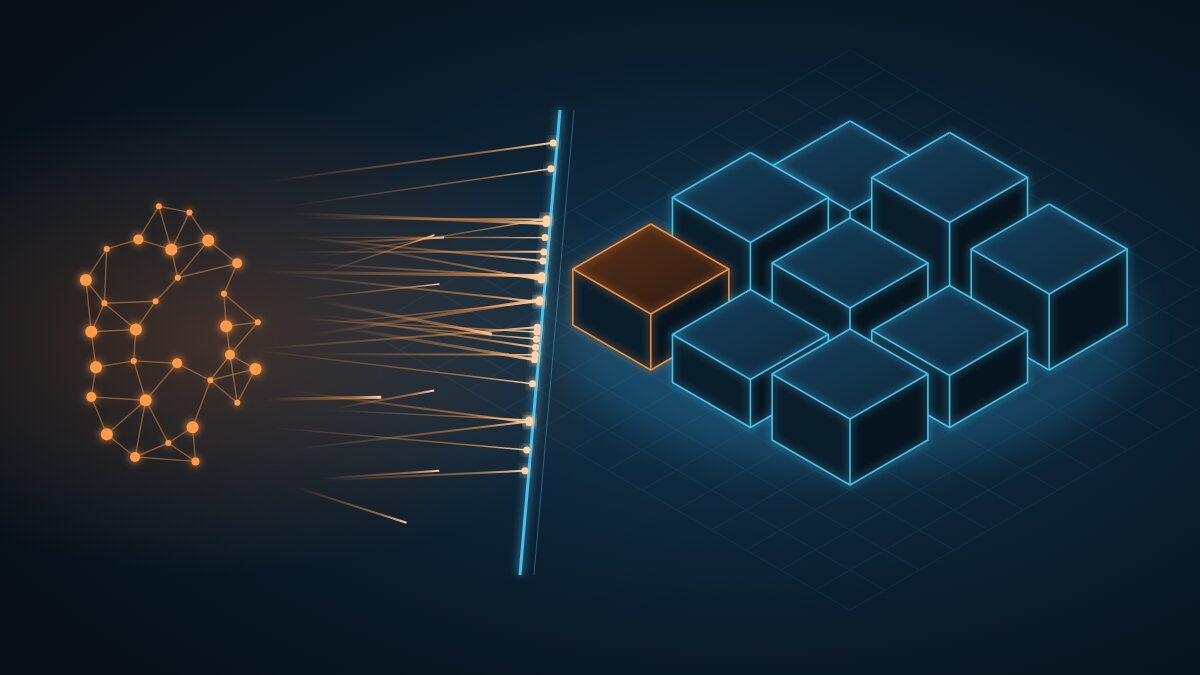
The last few years have made one simple thing clear: the speed at which attackers find and exploit vulnerabilities has grown by orders of magnitude. The reason is artificial intelligence. What used to require a skilled team and weeks of work can now be done in hours or even minutes. And attackers don't only go after the company directly. They also go after its infrastructure provider.
This changes the basic assumptions on which most modern enterprise systems were built.
What exactly the problem is
Defense used to rely heavily on asymmetry: the defender knows their system better, while the attacker spends a lot of time on reconnaissance and finding the right exploits. AI breaks that asymmetry.
Models can already:
- quickly scan and analyze code and configurations;
- generate and test exploits;
- adapt attacks to a specific environment;
- automate entire chains — from reconnaissance to persistence and lateral movement inside the network.
As a result, the window between a vulnerability appearing and its mass exploitation keeps shrinking. What teams used to have time to patch, they now often don't even have time to detect.
The second part of the problem is that attacks are not only aimed "head-on" at your company. Attackers increasingly target the infrastructure provider. A large public data center or cloud provider serves hundreds or thousands of customers. A successful attack on it gives access to, or influence over, a large number of organizations at once. The concentration of customers in a handful of hyperscalers turns them into a very attractive target.
For a small or mid-sized company, this means that even if you did everything "right" yourself, you still depend on the security of someone else's large infrastructure, over which you have almost no influence.
The risks that follow
1. Loss of control
When critical systems and data live in the public cloud, the company effectively hands control over part of its perimeter and operating environment to an external provider. If the provider has an incident, you are limited by its response, its priorities, and its recovery capabilities.
2. Concentration risk
The more companies keep critical workloads in the same large data centers, the higher the cost of a single successful strike. This is no longer just one organization's risk — it is a systemic risk.
3. Attack surface expanded by "convenience"
Open internet access from work machines, a multitude of SaaS services, constant integrations, and remote access "for everyone" create an enormous number of entry points. AI makes it possible to quickly find weak spots across this complex surface.
4. Defenders' reaction time lags behind
While the team analyzes alerts, confirms the incident, and starts responding, an automated attack may already have gone through several stages.
What direction looks realistic
Abandoning the cloud entirely is unrealistic for most SMBs and often harmful. The point is not to "go back to the year 2000." The point is a sensible division of control.
The basic approach:
-
Keep critical data and the core of the business closer to you.
This can be your own on-prem, a private cloud, or colo (renting space in a professional data center for your own hardware). The key is that you control the hardware, the network, and physical access. -
Everything else can stay in the public cloud, as long as it is not critical and can be quickly restored or replaced.
-
Strict perimeter isolation.
The internal network of critical systems has minimal connection to the outside world. Outbound access goes through a very limited, maximally protected, and constantly monitored channel (a "pinhole"). -
Segmentation.
Even if the outer perimeter is breached, the attacker should not immediately gain access to everything. Critical segments are kept separate.
Restricting employees' internet access
A separate and important layer is what a work computer can see and access.
The logic is simple: a work machine is for work. Everything personal (messengers, news, shopping, entertainment, social media) goes through a personal phone and a public network.
On work computers:
- access only to the necessary work resources and services;
- minimal or no non-work internet access;
- strict software installation policies;
- control over removable media and peripherals.
This significantly reduces the likelihood of phishing, malicious code downloads, and accidental data leaks. Yes, it is inconvenient. But inconvenience is one of the tools for reducing risk.
Remote access: reality, not an ideal
Any public service that can be used to get inside the network (VPN, ZTNA, bastion, RDP gateway, etc.) is an attack surface. With AI, this vector becomes even more dangerous.
Therefore:
- there should be as few entry points as possible;
- each such point must be hardened as much as possible (hardware keys, short-lived credentials, device posture checks, continuous monitoring);
- even after a successful login, the attacker should end up in a heavily restricted segment, not the entire network.
The classic "one big VPN for everyone" is a bad solution. It is better to have several narrow, well-controlled, and segmented access points — or to move to models where employees work in an isolated environment (VDI) rather than directly in the corporate network.
A full air gap (no remote access at all) is too expensive operationally for most SMBs. So the goal is a balance between control and the ability to get work done.
What this does not mean
This is not a call to "throw out the cloud," nor a romanticization of old data centers in basements.
It is the recognition of a simple fact: now that attacks have become much faster and cheaper, and customer concentration at large providers has grown, the "everything in the public cloud + broad access" strategy is becoming riskier for critical systems.
A sensible division of control, a smaller attack surface, and stricter access discipline are not a step backward. They are an adaptation to the new speed of threats.
Questions worth asking yourself
- Which systems and data are truly critical to the business?
- Where are they physically and logically located right now?
- How many entry points from the internet exist, and how well are they protected?
- What can an ordinary work computer see and access?
- How quickly could you restore critical functions if a major provider had a serious incident tomorrow?
The answers to these questions will be different for every company. But these are exactly the questions that need to be asked more and more often.
Conclusion & strategy
AI has made attacks faster and cheaper, so the questions above are no longer theoretical. The answers depend on your company, but they are worth finding before an incident, not after. We help SMBs see where critical data lives, reduce entry points and limit access — calmly and step by step.